

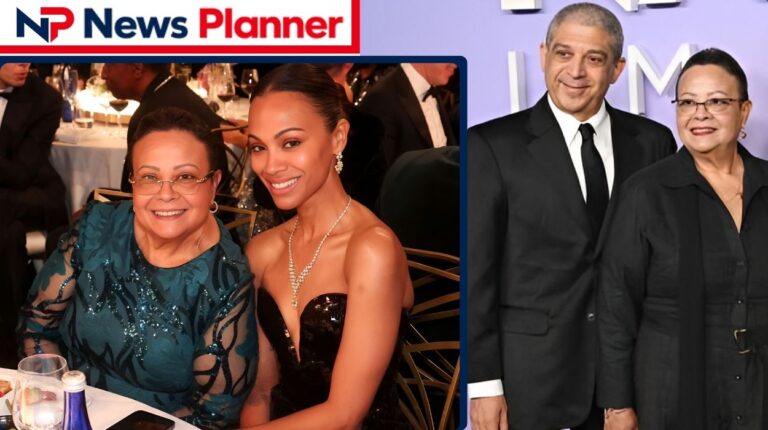
Behind Zoe Saldaña’s extraordinary Hollywood career is a mother whose courage, sacrifice, and cultural influence helped shape the woman audiences know today. Asalia Nazario largely maintains a private life, but Zoe has repeatedly described her mother as a source of confidence, discipline, and strength. Her influence stretches from Zoe’s bilingual childhood and dance training to her work ethic and pride in her immigrant heritage.
Asalia’s story is especially powerful because it unfolded away from movie sets and award ceremonies. Following the sudden death of her husband, she faced grief, financial pressure, and the responsibility of protecting three young daughters. She made difficult decisions, worked multiple jobs, and relied on extended family to give her children stability. Understanding that journey reveals how Zoe developed the perseverance required to become one of the most successful actors of her generation.
Quick Bio Table
| Detail | Information |
|---|---|
| Full name | Asalia Nazario |
| Known for | Being Zoe Saldaña’s mother |
| Heritage | Dominican and Puerto Rican roots |
| Former husband | Aridio Saldaña |
| Later husband | Dagoberto Galán |
| Daughters | Zoe, Cisely, and Mariel Saldaña |
| Languages at home | Spanish and English |
| Early family home | Queens, New York |
| Family connection | Dominican Republic |
| Major family challenge | Aridio’s death in a traffic accident |
| Parenting priorities | Education, confidence, discipline, and culture |
| Influence on Zoe | Resilience, work ethic, identity, and artistic curiosity |
| Public profile | Private, with occasional appearances supporting Zoe |
Who Is Asalia Nazario?
Asalia Nazario is best known publicly as the mother of Zoe Saldaña and her sisters, Cisely and Mariel. However, describing her only through her famous daughter overlooks the difficult personal journey that made her an important figure in the family. She raised her children in a multilingual, multicultural environment; taught them to respect both sides of their heritage; and emphasized education as a source of independence. Those foundations gave Zoe an identity strong enough to withstand the pressures of Hollywood.
Public sources sometimes describe Asalia simply as Puerto Rican, while more detailed accounts identify both Dominican and Puerto Rican roots in Zoe’s maternal family. Zoe has described herself as three-quarters Dominican and one-quarter Puerto Rican, illustrating a more layered background than brief celebrity profiles sometimes suggest. This distinction matters because Asalia helped connect her daughters to the Spanish language, Caribbean customs, and an extended family network spanning the United States and the Dominican Republic.
A Multicultural Childhood in New York
Zoe was born Zoë Yadira Saldaña Nazario in Passaic, New Jersey, in 1978 and spent much of her early childhood in Queens. Her full birth name preserves both sides of her family, joining her father Aridio Saldaña’s surname with Asalia Nazario’s. Inside the family home, Spanish was central, while English connected the girls to school and everyday life in New York. This bilingual upbringing later helped Zoe perform naturally in English- and Spanish-language settings.
Asalia and Aridio also encouraged their daughters to feel confident about their mixed Caribbean identity. Their home brought together Dominican and Puerto Rican influences rather than forcing the children into a single cultural category. That experience gave Zoe a broad understanding of identity, migration, and belonging. It would eventually inform her public support for Latino representation and stories about women from multicultural backgrounds.
The Loss That Transformed the Family
The family’s life changed dramatically when Aridio died in a traffic accident while Zoe was nine. His death left Asalia grieving while suddenly carrying the practical responsibilities of a widowed mother. Zoe later spoke honestly about how deeply the loss affected her mother, explaining that grief did not disappear quickly or neatly. Recognizing that emotional reality makes Asalia’s later decisions easier to understand: she was trying to keep her daughters secure while surviving an overwhelming loss herself.
Three pressures arrived together—bereavement, financial uncertainty, and the need to protect three children. Asalia could not solve them with one simple decision. She therefore drew on extended family support and arranged for her daughters to live in the Dominican Republic while she remained in New York and worked. Although separation must have been difficult, it provided the girls with schooling, family supervision, and a closer connection to their father’s homeland.
Sacrifice, Work, and Long-Distance Motherhood
Accounts of Zoe’s childhood report that Asalia worked multiple jobs to support her daughters and help pay for their education. This was not the glamorous version of sacrifice often presented in celebrity stories. It involved long hours, physical distance, and the emotional cost of missing everyday moments. Her effort nevertheless communicated a lasting lesson: love can be expressed through responsibility, endurance, and choices made for a child’s future.
Zoe has identified her mother’s work ethic as an important influence on her own life. The connection is visible in three aspects of her career: extensive preparation for physically demanding roles, persistence through rejection and limited opportunities, and loyalty to the family members who supported her. Hollywood success depended on Zoe’s talent, but the discipline needed to sustain that success was developed much earlier.
Life in the Dominican Republic
Living in the Dominican Republic became a defining chapter for Zoe and her sisters. They were immersed in Spanish, attended school, and developed stronger relationships with extended family. The move also gave Zoe a lived connection to Dominican culture rather than a heritage understood only through family stories. Those years strengthened her cultural identity while teaching her to adapt to unfamiliar rules and expectations.
The transition was not effortless. The sisters were coping with their father’s death, separation from their mother, and a different educational environment. Yet the experience also offered community, structure, and opportunities for creative development. Zoe and Cisely became involved in dance, and Zoe trained in ballet and other forms of movement. Dance provided discipline, emotional expression, and a direction that would later connect directly to acting.
How Asalia Encouraged Zoe’s Artistic Path
Zoe’s ballet training is often treated as an isolated career fact, but it emerged from the environment Asalia helped create. Allowing a child to pursue serious artistic training requires practical support, trust, and recognition that creativity can be valuable. Dance taught Zoe how to communicate physically, accept detailed instruction, and remain composed under pressure. Those abilities later distinguished her in action-heavy and performance-capture roles.
The benefits became visible in Zoe’s first major film, Center Stage, where she played ballet student Eva Rodriguez. Her movement background made the performance credible and helped open the door to screen acting. From there, three strengths continued to serve her: bodily control in physically complex scenes, emotional awareness developed through performance, and the discipline to repeat demanding work until it was right. Asalia did not build Zoe’s career for her, but she helped establish the conditions from which it could grow.
Returning to New York and Beginning Again
When Zoe returned to New York as a teenager, she brought dance experience, bilingual ability, and greater independence. She became involved with youth theater and performance groups before appearing on Law & Order in 1999. Her transition from dance to acting was not a complete reinvention. It was an expansion of skills already developed through movement, observation, and cultural adaptation.
Asalia’s example remained relevant during this uncertain period. Acting offered no guaranteed income or clear timeline for success, so Zoe needed patience, preparation, and emotional resilience. The lessons behind that resilience were practical:
- Work seriously even when recognition is uncertain.
- Treat cultural identity as a strength instead of a limitation.
- Remain connected to family while pursuing personal ambitions.
These principles helped Zoe approach acting as sustained work rather than a quick path to fame.
From Early Roles to Global Franchises
After Center Stage, Zoe appeared in projects including Crossroads, Drumline, and Pirates of the Caribbean: The Curse of the Black Pearl. Her career changed significantly when she played Nyota Uhura in Star Trek and Neytiri in Avatar in 2009. She later became widely recognized as Gamora in Marvel’s Guardians of the Galaxy films. Each role required a different mixture of emotional performance, physical precision, and imaginative commitment.
Zoe’s success across these franchises reflects more than popularity. She learned to work inside technically demanding productions while giving unfamiliar worlds emotional credibility. The adaptability developed between New York and the Dominican Republic, the physical awareness gained through dance, and the determination modeled by Asalia all formed part of that professional foundation. Her mother’s influence appears less as a single career intervention and more as a set of habits carried into every opportunity.
Family, Sisterhood, and Creative Partnership
Asalia raised daughters who remained closely connected into adulthood. Zoe, Cisely, and Mariel have collaborated through Cinestar Pictures, a production company created to develop entertainment and broaden the kinds of stories reaching audiences. Their partnership reflects family trust, shared cultural experience, and a belief that women can create opportunities instead of waiting for established institutions to provide them.
The sisters’ bond also demonstrates how they transformed childhood hardship into cooperation. They experienced bereavement together, adapted to life in another country, and eventually navigated entertainment as a family. Asalia’s parenting did not erase their difficulties, but it gave them a durable center. That family structure helps explain why Zoe frequently discusses achievement collectively, recognizing relatives, teachers, and mentors rather than presenting success as an individual accomplishment.
Cultural Pride and Representation
Zoe has spoken openly about being a Black Latina with Dominican and Puerto Rican heritage. Her identity has sometimes challenged Hollywood’s narrow expectations about ethnicity, appearance, and casting. Rather than reducing herself to one label, she has emphasized the complexity of her background. That confidence can be traced to a childhood in which Asalia preserved language, family history, and Caribbean traditions.
This influence extends beyond personal pride. Zoe’s production work and public comments have supported greater space for women and Latino creators. She understands representation through three connected experiences: growing up between cultures, entering an industry that often relies on simple categories, and becoming successful enough to help expand those categories. Asalia’s cultural guidance therefore became part of a broader professional purpose.
Asalia Nazario at Zoe’s Historic Oscar Moment
Zoe reached a historic milestone in 2025 when she won the Academy Award for Best Supporting Actress for Emilia Pérez. During her acceptance speech, she celebrated her immigrant family, honored her mother in the audience, and remembered the grandmother who came to the United States in 1961. She also expressed pride in accepting the award as an American of Dominican origin. The moment connected worldwide recognition to generations of family sacrifice.
Asalia’s presence gave the ceremony additional meaning. Decades earlier, she had worked to provide stability and education while her daughters lived apart from her. At the Oscars, she witnessed one of those daughters reach the highest level of professional recognition. The distance between those two moments tells the central story: private sacrifices can shape achievements that become visible much later.
Why Asalia Nazario’s Story Matters
Asalia Nazario’s life offers a meaningful perspective on the unseen labor behind public success. She faced widowhood, economic pressure, and family separation without knowing what her daughters’ futures would become. Her choices should not be romanticized as painless, but they can be respected as responses to difficult circumstances. She used work, education, cultural continuity, and extended family support to create stability when stability was not guaranteed.
Her influence on Zoe can be understood through three lasting gifts: resilience during uncertainty, pride in a layered cultural identity, and discipline in pursuing creative work. None of these guarantees fame, but all can help a person handle opportunity responsibly. Zoe’s accomplishments belong to Zoe, while Asalia’s contribution lies in the values, security, and example that helped her daughter develop.
Final Thoughts
Asalia Nazario shaped Zoe Saldaña’s success through daily choices rather than celebrity connections. She protected her daughters after tragedy, supported their education from a distance, preserved their bilingual Caribbean identity, and demonstrated the importance of determined work. Those lessons accompanied Zoe from ballet classes and youth theater to Avatar, Star Trek, Marvel films, and an Academy Award.
The most memorable part of Asalia’s story is its quietness. Her influence reminds readers that remarkable careers often rest on sacrifices the public never sees. Zoe Saldaña’s talent made her a global star, but her mother helped give that talent confidence, discipline, cultural depth, and room to grow.
Frequently Asked Questions (FAQs)
1. Who is Asalia Nazario?
Asalia Nazario is the mother of actress Zoe Saldaña and her sisters, Cisely and Mariel. She is recognized for supporting her daughters through profound family hardship.
2. Where is Asalia Nazario from?
Asalia is commonly associated with Puerto Rican and Dominican family roots. Public descriptions vary, so overly specific claims about her birthplace should be treated cautiously.
3. Who was Zoe Saldaña’s father?
Zoe’s father was Aridio Saldaña, who was Dominican. He died in a traffic accident when Zoe was nine years old.
4. How many children does Asalia Nazario have?
Asalia has three daughters: Zoe, Cisely, and Mariel Saldaña. The sisters have remained close and have worked together professionally.
5. Why did Zoe move to the Dominican Republic?
Following Aridio’s death, Zoe and her sisters went to live with extended family in the Dominican Republic. Asalia remained in New York, working to support their schooling and living expenses.
6. How did Asalia influence Zoe’s career?
Asalia modeled discipline, resilience, and dedication while encouraging education and cultural pride. She also helped create an environment in which Zoe could explore dance and performance.
7. Was Zoe Saldaña a professional dancer?
Zoe received serious ballet and dance training during her youth in the Dominican Republic. Although she ultimately pursued acting, that training supported her breakthrough performance in Center Stage.
8. What languages did Zoe speak growing up?
Zoe and her sisters grew up speaking Spanish and English. Their bilingual upbringing helped maintain cultural ties while they lived in the United States.
9. Did Asalia attend Zoe’s Oscar ceremony?
Yes, Asalia attended the 2025 Academy Awards when Zoe won Best Supporting Actress. Zoe acknowledged her mother and immigrant family during her acceptance speech.
10. What is Asalia Nazario doing now?
Asalia keeps much of her present life private, and reliable public information about her everyday activities is limited. She occasionally appears with Zoe at meaningful family or industry events.
More Articles : Rich Orosco’s Life Story: From Entertainment Executive to Julie Benz’s Husband
